• One of the things that we hear all the time is that everything is accelerating. It is the core theme of everyday commentary on politics, but also a seriously treated idea in the works of philosophers like Hartmut Rosa or Paul Virilio. This acceleration is described, at least in Rosa’s work, with dimensions of change, but not the rate of change. Just that it is accelerating. Virilio’s work is also focused on speed and he quickly takes it to the boundaries – like the speed of light.

    But here is a thought. Isn’t the most interesting thing not speed or acceleration – but rather the relative rate of change?

    Let’s take technology. When we say that technological change is accelerating it has to be accelerating relative to something, it has to be both catching up to something and leaving something behind. What that is will be much more revealing than the simple observation that it is gaining speed.

    Even in analyzing technology we can ask if something is changing faster than something else and get interesting results. Take airplanes and phones. Which is accelerating the fastest, and has this been constant through-out the existence of these technologies? What does it mean when the phone evolves much faster than the plane? How do sociological patterns change and what are the second order effects?

    Mobile phones evolve relative to other technology – and that is where the most salient insights are found.

    Here is a thought – social change should not be modeled so much on the pace of technological change as the differential rates of change between different technologies, institutions and us humans.

    This is not a new insight, of course, the notion of relative change being the central challenge is embedded in the well-known quote by E O Wilson where he suggests that our challenge is that “we have paleolithic emotions, medieval institutions, and god-like technology“.

    Any foresight work or scenario planning needs to take into account the relative rates of change of the incorporated variables and ideas. A few simple, coarse-grained examples.

    Privacy evolves in the relative rate of change between the ease with which we reveal the human condition as data and our ability to set norms and legislation around how societies divide power over identity and safe-guard individual autonomy.

    Free expression evolves in the relative rate of change between the ability of citizens everywhere to both produce and consume attention and the sum total social cognitive capacity that we have access to for deliberation and decision in our polities.

    Our economy evolves in the relative rate of change between our technological advancement and our social adoption and organizational situation of those new capabilities.

    The exercise then becomes this — look at the phenomenon you want to model in scenarios and suggest the relative rates of change between the relevant driving forces. Want to understand China? Look at the relative rate of change between the forces driving the evolution of China – the growth of the middle class and the re-centralization of political power (just two examples, could be anything). Want to understand the future of platforms? Look at the rate of change between new users adopting the platform the regulatory interventions applied to them (adoption slowing down, regulation speeding up). And so on.

    There is more to say about this, and it has to do with what drives rates of change too — but more about this later, when I want to try to say a word about tempo and mode in evolution.

    +
  • Today I needed to write a small think piece in Swedish. It is about platform responsibility, but really about what we think platforms will look like in the long, long run and if they will be able to carry our public sphere. Spoiler alert! I think so.

    If you know your Swedish here it is.

    +
  • How large is the public sphere? How large can it reasonably be? If we assume that the public sphere is at least to some degree rooted in our biological nature, it seems as if we could answer the question partially by looking at how large our social networks reasonably can be. This in turn leads us to examine things like the Dunbar number – Robin Dunbar’s hypothesis about how large a group our neurological capacities can sustain.

    The Dunbar number – arrived at by looking at brain sizes in primates and how they relate to group sizes – reveal that we have, biologically, a boundary at about 100-230 people.

    This has been interpreted to mean that the thousands of friends we have in social networks cannot all be real friends, and that we are deceiving ourselves about how many social contacts we can manage – but there is naturally a connection here also to our ability to carry a polity.

    The size of our politics matter – there is a palpable difference between politics in the city and politics in international organisations – and as we debate the relationship between technology and democracy, one of the things we may want to examine more closely is the question of how we organize that size.

    A flat global public sphere seems impossible, if we propose that there are biological boundaries at around 200 people — and the results of the size / deliberation mechanisms mismatch likely leads to a break down fairly quickly.

    One application of this is free speech. It is interesting to note that free speech also has a size. Even in dictatorships small groups form where people speak freely, but the difference – or at least one difference – between dictatorships and democracies is the size of groups that enjoy free speech. The term “free speech” obscures the question about size and assumes that the audience can be of any size – something that was never proposed by any theorist, or even analysed more in detail.

    The second limiting factor is also biological – it is the amount of attention we can effectively pay to a discussion and debate. If time is too fractured and our attention dissolved in distraction we lose our ability to disagree meaningfully as well.

    How large free speech can be – how many people can deliberate together – is an open research question. The creation of a global public sphere seems unlikely. What is more concerning is that even national public spheres seem to hold up poorly in some cases. Solutions are also hard to come by – is what we need here some kind of sharding of the public sphere? Is there a way to decompose and then re-assemble free speech so that it scales better than if everyone just screams into the same digital aether?

    One way to think about the relationship between free speech and technology is to examine the functional perspective and ask what it is that we need free speech for. Two alternatives readily present themselves to such an analysis: the first is discovery, finding ideas an opinions that can be evaluated and used to advance human society. The second is deliberation, the debate and discussion about how we make decisions in our societies. The first is roughly a market place of ideas and the second a Habermasian public sphere. The first perhaps more American and the second more European in origin.

    What did you do to my public sphere?

    Now, what technology does is that it vastly expands our powers of discovery, but at the same time does nothing – and there by degrades – our capability to deliberate within that enormous space of opinions.

    Developing means to think through how we design disagreement in networked environments then seems to become key. Human interaction is always designed, and some of the most detrimental social outcomes flow from the assumption that we have a natural social ability to do something — there are few if any natural social abilities in complex societies like modern day states. It all is designed, either by ourselves or by chance (I do not believe in malicious designers behind our challenges here – that both overestimates and underestimates the nature of the work we need to undertake here).

    What if our democracies are not networks, or do not functions as networks, but need to be designed as networks within networks, limited by considerations of our biological capability – group size and attention – to carry a structured disagreement?

    + , ,
  • In Gary Klein’s work on insights, Seeing What Other’s Don’t (2013), the author spends a fair bit of time on discussing what happens when we have had an insight, and why so many organizations ignore them. His explanation is that many organizations lack a process for changing goals or adapting objectives. Klein notes:

    People often resist goal insights. Organizations tend to promote managers who tenaciously pursue their assigned goals. They are people who can be counted on. This trait serves them well early in their careers when they have simpler tasks to perform, ones with clear goals. That tenaciousness, however, may get in the way as the managers move upward in the organization and face more difficult and complex problems. When that happens, the original goals may turn out to be inappropriate or they may become obsolete. But managers may be incapable of abandoning their original goals. They may be seized by goal fixation.

    Klein, Gary from Seeing What Others Don’t (2013) p 220

    Even in formal tests, we seem to be unable to update or revise our goals when events change, Klein cites a study looking at how managers performed in simulations where events made goals obsolete:

    The Sengupta study tested hundreds of experienced managers in a realistic computer simulation. The scenario deliberately evolved in ways that rendered the original goals obsolete in order to see what the managers would do. They didn’t do well. Typically, the managers stuck to their original targets even when those targets were overtaken by events. They showed goal fixation, not goal insight.

    Ibid p 221

    One reason for this is that when we work with goal insights we reach a point where we have to revise our beliefs, and this means that we have to admit, at least to ourselves, that we were wrong. That smarts and may even light up the same areas in the brain as those that are connected to physical pain if it is associated with rejection.

    “What should we do with all of these insights?”

    It seems obvious, then, that most organizations do not revise their goals often enough. So, how can we change that? One way is to build goal revision into review cadences – and ensure that it is not associated with individual pride or pain, but with adaptation. You could even imagine appointing a goal challenger – someone who suggests a goal revision in the meeting. This would be a bit like a devil’s advocate, but with a constructive twist: the person in question needs to challenge the goal and suggest an alternative goal.

    There are probably great savings here too. A lot of good money is thrown after bad goals.

    Interestingly, organizations that focus on OKRs are probably especially vulnerable to this – because they invest so much in the objectives and key results. These become canonical, and questioning them is seen as weakness. It is almost built into OKRs: the idea that you should never reach your OKRs at 100% is tacit admission that it is better to work towards and objective and fail – than change the objective. This is why I increasingly think that the use of OKRs may need to be complemented with a focus on capabilities and adaptation – and goal revision is a part of that adjustment.

    The key thing to get right here is to make sure that goal revision is not confused with goal reduction, and this is where the OKR-model has definitive strengths: it commits us to reach an objective that is ambitious – a BHAG, big, hairy and audacious goal – and doesn’t let us get off with something easier. So when revising a goal we need to test it for audaciousness – but that is completely doable!

    Goal revision is not equal to lowering your ambitions or expectations. It is allowing insights to cut through.

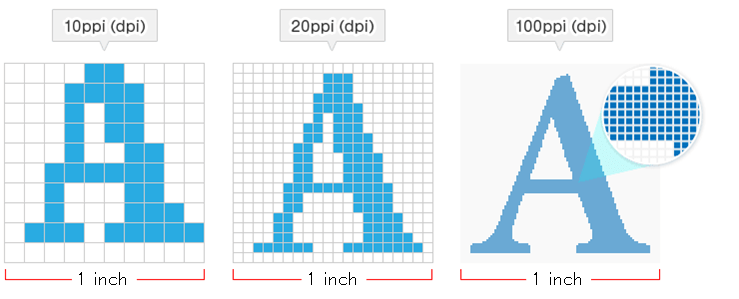
  • A useful way to think about problem solving is to think about the diagnosis or description of the problem as coming in different resolutions. And here it is important to remember that it is not always helpful to aim for higher resolution – since what you gain may not be much, and the time and effort it takes to increase resolution may be significant.

    An example:

    Assume you are asked to determine what letter this is. Does it then matter at all if you have the left-most resolution or the right-most? Probably not, right? Yet, a lot of problem solving, theory building and analysis assumes that the right-most picture is better!

    The challenge of resolution is especially acute when you are dealing with complex systems. Here. even a “coarse-grained” model can be extremely useful, since it allows you to see different things and step back from the picture. One of the best examples of this, I think, is the work of Geoffrey West in his book Scale: The Universal Laws of Growth, Innovation, Sustainability, and the Pace of Life in Organisms, Cities, Economies, and Companies (2017).

    West notes the usefulness of coarse-grained models in several places, such as this paper. as he describes his collaboration with two outstanding biologists:

    In addition to a strong commitment to solve a fundamental long-standing problem that clearly needed close collaboration between physicists and biologists, a crucial ingredient of our success was that Jim and Brian, in addition to being excellent biologists, thought like physicists and were appreciative of the importance of a mathematical framework grounded in ‘first principles’ for addressing problems. Of equal importance was their appreciation that, to varying degrees, all theories and models are approximate; the challenge is to identify the important variables that capture the essential dynamics at each organizational level of a system thereby leading to a calculation of their average properties. This provides a coarse-grained ‘zeroth order’ point of departure for quantitatively understanding specific biosystems, viewed as variations or perturbations around idealized norms due to local environmental conditions or historical evolutionary divergence.

    West, G “A theoretical physicist’s journey into biology: from quarks and strings to cells and whales” 2014 Phys. Biol. 11 053013

    This idea, achieving a “‘zeroth order’ point of departure” is underestimated and not often used. A first model of any phenomenon is more useful than no model at all – and that is often forgotten.

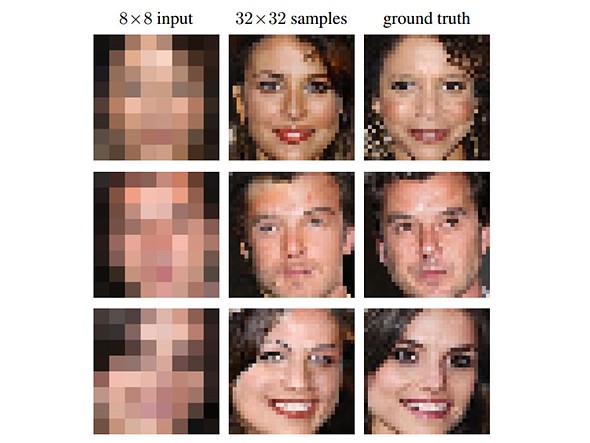
    Then again, of course, there are problems that require at least mid-level resolution. Look at this example of resolution re-construction from Google Brain:

    If you are asked to identify a person, the left most low-res image now is useless! So resolution really matters in problems, and in many cases will determine if you succeed in solving a problem or not. A good question to ask oneself, then, becomes – is this a problem that requires a low, mid or high resolution understanding or diagnosis?

    +
  • At the end of the New York Times article detailing the decision by Twitter to de-platform president Trump, there is a short note that hides a real, and vexing problem:

    Beyond muting Mr. Trump’s biggest megaphone, Twitter’s decision could create headaches for the Trump administration when it comes to complying with the Presidential Records Act of 1978, which requires the preservation of presidential materials and communications.

    Conger, K and Isaac M “Twitter Permanently Bans Trump, Capping Online Revolt” NY Times 2021-01-09

    This is a bigger problem than it may seem. Imagine you are writing the history of this moment in 100 years or so – what are your source materials? How do you understand the crumbling of the shared reality of our polity? What means do you have to assert if the popular hypothesis that this was all about “filter bubbles” and “echo chambers” really is born out by the evidence?

    For the record, I think that all technology does here is to increase the distinction between what Julia Galef calls soldier mind and scout mind (this Long Now Foundation video is a must watch!) – and that the choice to believe what unifies a group is a natural, although harmful, choice that has evolutionary roots — and that this in turn means that our challenge is that when we build shared cognition to find ways to counter act not technology-driven filter bubbles as much as evolutionary patterns of thinking.

    A must read from Julia Galef

    That is a significantly harder problem and may even say something about the possible sizes of shared cognition that we can sustain as a society — how large can an episteme, a shared set of facts, be in both number of items and number of actors? What is the maximum size of an episteme that can be the foundation of a polity? What kinds of shared cognition can support a democratic polity? These are important questions and the require that we have access to and can study the emerging patterns of shared cognition in our society – and like it or not, Twitter is a form of shared cognition – the study of which will be essential to understand our options of institutional design for future democracies.

    But none of this will be possible if we allow what Vint Cerf, one of the founders of the Internet, has called “bit rot“. Our digital behavior is eroding faster than behavior that requires paper or other media, and it is eroding in several dimensions. It is eroding in noise, noise working as an acid that slowly eats away at any semblance of a canon or mainstream set of data, and it is eroding in deletion where data is deleted consciously or through everything from mechanical failure to loss of formats, applications and operating systems.

    In many ways we live in a paradox, an amnesiac information society where knowledge is key but ultimately ephemeral and bound to be lost.

    There is value in ephemerality, and some applications thrive on designing it – the social media posts that evaporate after a few days or few clicks serve a purpose, and SnapChat deserves special credit for first thinking seriously about how much of our social behavior that is usefully capture for the sake of our autonomy and self-determination, but the reality is that very little of ephemerality is consciously designed.

    A library is one model for conscious curation.

    The opposite of designed ephemerality is conscious curation. It is alarming to see that not only do we not design our ephemerality, we also have lost the will and capability to consciously curate the data that we produce. Digital preservation efforts without curation will lose something important, the emphasis and articulation of our age in the historical record. What we save is essential for understanding who we are, and what we value. And what survives anyway will speak volumes of our prejudices and blind spots.

    One useful frame or concept here is that of the “archive”. As detailed in this recommended paper by Marlene Manoff, the concept of the archive recurs across disciplines as a version of everything from externalized human memory to the source of power. Philosopher Michel Foucault suggested that the archive is really the set of institutions and technology that allows us to think through participating in the discourse of our time – and so implicitly suggesting that control over the archive is control over a society. Societies that lose any ambition to archive, to remember or to carry a discourse will never be able to build that common framework of facts – because we do not think in facts as much as we do in narratives.

    This is important, I think. Any attempt at reinstitution of a shared framework of facts will fail unless it is grounded in an archive and a practice. There is no world in which is effective to just tell people what the facts are. That never helps. What you need to be able to do is to allow people to navigate in the world and find a compass to allow them to find their way. Truth may not be so much believing certain propositions as engaging in certain practices.

    Consciously curating this moment seems key, and a large part of that is all of the commentary that is written and shared through newspapers, magazines, blogs etc — but a longer curation, a slower curation where data is saved for future research and analysis is largely missing. If we don’t have that – if we allow this moment to be lost in time, refusing to archive it together, we risk not just the trite “repetition of history” supposedly inflicted on those who refuse to learn from it, but a more foundational loss of history that slowly will erode other democratic institutions our powers of shared cognition are increased without the archive to give us a north star.

    + ,
  • While walking today in the Haga Park, which is close to where I live, I mentioned to a friend that I recently saw the strangest thing in one of the small woods that are scattered through the park. In the middle of nowhere, focused at a small clearing, there was a surveillance camera. It looked old, and not connected, and I could not for the life of me figure out where it came from or why it had been placed there, in the middle of the woods. This is what it looked like:

    His reaction surprised me. He had also seen one of these in the woods in the park, but in a completely different place. Also focused on nothing at all. He took me to see that camera, and it was the same mark and the same weird location, focused on a small patch of land in the middle of the forest.

    So, now we had two weird surveillance cameras in places that made no sense what so ever. Their locations are as follows. The first one was found here:

    And the second one here:

    They are far enough away from each-other to not seem as if they are connected either. A closer examination of the camera suggests that it has been CE-marked, but that is about all that I can say about it.

    So. We have two cameras in Haga Park, in places where there is literally nothing to surveil and they are aimed in weird directions. They seem worn and yellowed, and not used for sometime. What is going on here? Here is what it looks like from below. Note the “2” written on the bottom. No “1” on the first one, I think. I will have to dig into that though.

    The first one was found close to a military compound now converted to a hotel and conference location. The second close to Haga Gård. But if they are set up to protect these (there are royals who live in the Park, well in a castle in the Park) they have been placed in a way that is inexplicable.

    Anyone with clues, ideas or explanations for these cameras is welcome to comment or send me a note. I really would like to know what these were for – and when they were put up. Are there more? Are they still operational? I have to think they are not – and am not worried about posting something that reveals an intricate protective set of measures – they look completely beaten up and old.

    As an aside: life is filled with small mysteries like this. They should be pursued. They are the universe’s way of reminding you that there is something fishy about this whole life we live and that while we should not descend into conspiracy theories, we should not be too complacent about the weirdness of it all.

    +
  • The storming of the Capitol yesterday was in many ways an instructive event. The political repercussions will reverberate through the coming years and we have most likely not seen the last of president Trump yet. Furthermore, the tech policy questions around platform responsibility are now likely to be even more in bipartisan focus in both the US and elsewhere — politicians in other countries will consider how they deal with the fact that a large part of the public square are managed by private actors, but then again: that has been the case for the last century, with newspapers, private TV-channels and other corporate actors working hard to expand the public conversation and include more and more people. The view that our public sphere has been privatized is one that lacks historical perspective and reference classes.

    But the thing that stands out to me is how hard it is to work with the future given all that has happened. I can safely say that I did not predict a storming of the capital or that the president’s social media accounts would be locked down to stop instigation of violence. Few other predicted that it would go quite so far either. It suggests that there is an interesting problem here of scoping the possible.

    We have noted, again and again, that the world is more uncertain than it has ever been before. There are indices and research indicating that this is the case.

    Uncertainty indices every where — see here

    But the way we traditionally deal with that is through scenario planning and scenario analysis. The challenge, however, is that even if this focuses on the possible rather than the probable – hence allowing for significant uncertainty – we have not stretched the limits of the possible far enough.

    Scenario analysis is much better than predictive techniques in situations of high uncertainty, since you only need to sketch out the possible and not the probable (no probabilistic assessment necessary, in fact, it is often frowned upon with scenario analysis). But uncertainty works in several dimensions – one is that it is harder to assess which scenario we will end up in or how individual events will unfold. The other is that the range of the possible must be expanded radically. This latter part is what will be challenging for planning and scenario departments all over the world.

    We need to find ways of expanding our sense of the possible to capture the richness of scenarios in an increasingly uncertain world. What this means is that we need to look for techniques to challenge our assessment of the range of possibilities. Here are a few ideas:

    • Invert. What do you think will not happen? Examine those boundaries of the possible closely. Don’t posit aliens, but what about civil war? What are the assumptions that make you exclude that as a possibility? Produce statements like “We will at least not see X” and then let others in the team construct counter arguments.
    • Check history as a reference class. But check long history. Democracy is not a natural state of man, as noted by Adam Gopnik recently. What does a larger arc reversion to the mean look like?
    • Use fiction. How would this evolve if you only looked for narrative conflict intensifying?

    These and other methods may help check our tendency to keep the limits of the possible static even under growing uncertainty.

    + ,
  • When looking at any phenomenon, our instinct is often to think about it as linear or exponential – and when we draw curves those are the ones that most readily come to mind. But there is a class that let’s us think differently and could be useful to apply in analysing any problem – the U-shaped curve.

    The U-curve as mental model is a useful testing tool.

    There are several interesting examples of U-shaped curves in the literature, such as:

    Midlife satisfaction. We are unhappiest around 40-50 and then start becoming happy again.

    Returns on years in education. In many countries the returns on secondary education are less than on primary or tertiary.

    Alcohol consumption. Moderate consumption is argued – though this is contested now – to have a slight positive effect on health.

    Magazine readership. Either people subscribe and read religiously or just read a single issue. (True for TV-series too?)

    Some have argued that the U-shaped curve is also found in the relationship between GDP and democracy – that as GDP per capita increases states risk sliding into autocracy, but when everyone becomes affluent the result is different.

    Other examples could include the Solow paradox – that we see investments in information technology everywhere but in the productivity statistics. Maybe that is a U-curve phenomenon, and we just need to invest more? In fact, this does seem somewhat likely when you think about technology introduction in organizations – it slows down the organization at first but as the investment in technology and training to use the technology (an investment as well, of course) increases we see productivity gains.

    The reversed U-curve can be found in the value of data – where too much simple devolves into noise, and where the costs of finding the data that is useful routinely becomes higher than the value you expect the data to have for you in, say, decision making.

    The reverse U-curve may also be found in the relatiuonship between the size of a company and its perceived social value, at least that seems to be the case in a few of the on-going discussions about the tech-lash where size alone is seen as problematic.

    And, of course in mortality in diseases and epidemiology – where both the U curve and reversed U-curve can be found in different pandemics — and where the shape of the disease foot print matters for any strategy we adopt.

    +
  • There are now a number of reviews and summing up notes about the most impactful papers in AI in 2020. Data Science Central has a nice one – and also links to a few others. It is interesting to look at these to see what is highlighted and what is missing. I, for one, was surprised to see that the list from DSC does not seem to include any applications of AI to scientific work; it is mostly about language – from chatbots to GPT – and yet I believe it is not out of the question that applications of artificial intelligence in science will be the most interesting and fundamental change we will see in the short term.

    The idea that artificial intelligence can be applied in science is not new. Stanislaw Lem believed that it was one of the core reasons to develop what he called “intelectronics” and he noted that artificial scientists were one of the most promising ways in which we could deal with the inevitable shortage of scientific attention we increasingly face.

    Lem’s argument can be translated into a simple model. Imagine the sum of our knowledge in the world is represented by a sphere and that we are in the midst of that sphere. As we learn more about the world the sphere grows – leading to an interesting search problem. Let us imagine that learning is essentially a search problem across the surface of the sphere and that scientific insights that allow us to expand the sphere are randomly distributed across the surface of the sphere and that the number of such insights that allow for us to expand the sphere are constant – then the search problem grows with the area of the sphere.

    The set of eligible scientific problems we can work on grows at one pace P, and the available scientific attention at another S. As long as P grows faster than S, the result will be a slowing down of the growth of science.

    Lem realized this well, and the same insight has been brought up again and again by, for example Nicholas Nassim Taleb as he discusses the tragedy of big data – where exponentially growing data sets see us struggling to sift out spurious correlations from meaningful causation at the same mismatch rates.

    In its simplest form it is the problem Herbert Simon was addressing when we noted that with a wealth of information comes a scarcity of attention, and a need to allocate attention efficiently. Simon, like Lem, realized that the reality is that we need to build tools – both Simon and Lem believed that artificial intelligence was the key tool here – to help us deal with the tension between information and attention.

    The general form of our problem – the Gap Problem

    The way Simon formulated the problem downplays the dynamic, however. The rates at which wealth of information grows and attention is spent are key – and there are boundary scenarios in which the discrepancy between the two becomes disastrous. Any search problem across a certain space where the space grows too fast and the solutions become too dispersed is unsolvable. Imagine searching in not just a dancing fitness landscape, but in a dancing and rapidly expanding fitness landscape — that is the kind of problem we are looking at now: where the move from a local maxima to any other point involves traveling across expanding deserts of suboptimality.

    Our best bet is thinking through how artificial intelligence can be turned into a scientific tool, re-imagining the scientific method with new technologies. This will require some interesting epistemological work as well — Lem notes that we are close to a point where understanding will be decoupled from predicting. We will be able to predict systems without understanding how we do it. This in turn will require that we re-examine the notion of explaining. When is a phenomenon explained — is it when we can understand and predict it or is prediction sufficient?

    The notion of p-explanations and u-explanations will also challenge how we think about science overall, if we need to make the distinction.

    This is a long way of saying that I would have expected more articles around artificial intelligence in science in these lists (this comes to mind), and this makes me think that the impact AI will have not on writing texts or chatting, but on scientific exploration, is undervalued. There is a connection here with the interesting thinking pattern of observation that I wrote about in my first newsletter as well — can we make computers not think so much as observe?

    +